
Whole Cumin and Chili Inputs for In-House Roasting and Grinding
Buy whole cumin and prepared chili separately when your own operation will roast and grind them. The whole-cumin listing supplies a seed starting point; RELIA SPICES can discuss the chili cut and preparation you need before milling. Compare each cooled component for aroma and usable powder before combining the seasoning. Send your mill-feed requirements, finished grind and flavour reference on two separate ingredient lines.
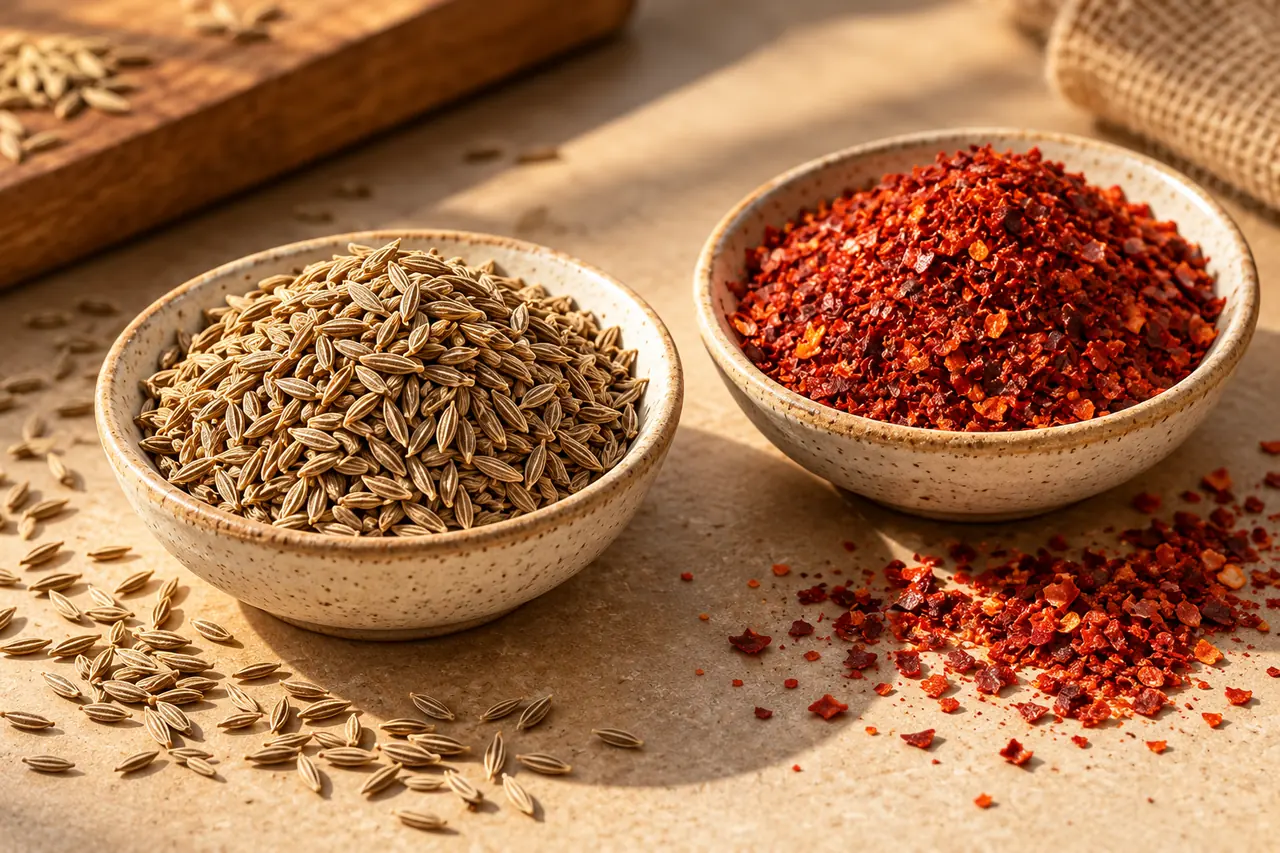
- Cumin input
- The listing describes whole, elongated, ridged dried cumin seeds.
- Chili input
- Cut-pod chili lists 8–12% moisture and 8,000–12,000 SHU.
- Buyer process
- Compare cooled aroma and accepted powder from your own roasting and grinding.
Choose the preparation delivered to your mill
Agree the chili preparation we supply and the roasting or milling work your operation retains.
- 01Whole cumin seed
Receive the agreed seed condition for your roasting operation.
- 02Prepared chili
Agree cleaning, stem condition and the cut entering your equipment.
- 03Your processed components
Approve cooled aroma and powder distribution before blending.
For chili feedstock, RELIA SPICES can clean and destem purchased dried chilies, then cut or crush, sieve and pack the preparation agreed for your operation. The cut-pod candidate lists 8–12% moisture and 8,000–12,000 SHU. Select the actual pieces and seed-to-skin condition needed by your equipment.
The whole cumin is a separate catalogue ingredient: dried, elongated, ridged seeds described as Raw, with twelve months in cool, dry storage. Buy it for your own roast-and-grind route. Our confirmed chili-processing capability does not establish cumin roasting or specialist cumin milling.
Start the cumin discussion with the whole-seed listing
Whole cumin is the starting material; approve the seed condition before evaluating your roast.
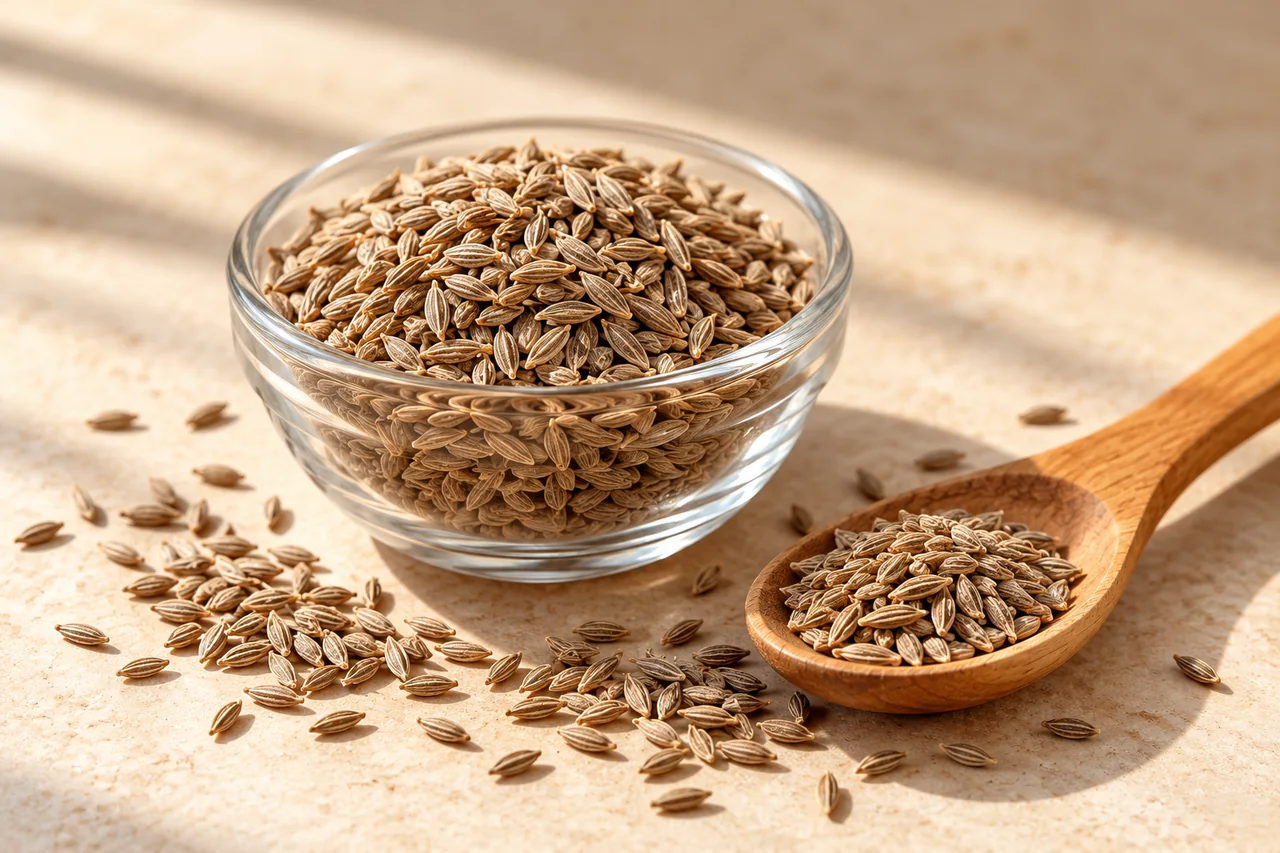
The whole dried cumin listing describes elongated, ridged seeds, a light-gray colour description, Raw and AD processing terms and use in cooking or food ingredients. Its twelve-month cool, dry storage declaration belongs to the incoming seed, not the powder you will produce after roasting.
For receiving, define seed identity, broken material, foreign matter and complete composition. Any purity result needs the actual method and material definition. Compare these against an identified sample; a percentage without its test basis cannot select the seed preparation for your operation.
Ingredients to compare for this application
Whole dried cumin seeds
Choose as incoming seed when your own operation will roast and grind cumin.
- Whole elongated, ridged seeds
- Raw and AD descriptions
- 12 months in a cool, dry place
Cut-pod chili preparation
Discuss a prepared chili feedstock with a defined cut and heat profile before your mill trial.
- Cut-pod pieces with visible seeds
- 8–12% moisture reference
- 8,000–12,000 SHU reference
Coarse chili pieces for spice preparation
Compare when you want to define more of the remaining cutting or grinding work yourself.
- Coarse chili-piece presentation
- Spice-preparation use
- 24-month cool, dry storage reference
These product specifications are a starting point for selecting a grade. Match the proposed material and sample to your food and order requirements.
Choose chili pieces by usable preparation rather than a name
Select actual mill-feed pieces instead of interpreting an undefined entry as a mesh grade.
| Incoming item | Decision needed | Keep distinct |
|---|---|---|
| Cut-pod pieces | Actual cut and seed-to-skin condition | The 4–7 cm entry does not define every delivered segment |
| Coarser chili material | Complete composition and executed preparation | The unitless 20–40 entry is not a selected mesh grade |
| Buyer preparation | Cleaning, cutting and roasting handover | State the work remaining before your mill |
Choose the chili by the material your equipment can use. The cut-pod candidate lists 8–12% moisture and 8,000–12,000 SHU. Its separate 4–7 cm entry does not define the length of every delivered segment.
The coarse chili-piece candidate describes spice use and a unitless 20–40 entry, with FD and Blended wording. Discuss the actual cut, full composition and work remaining before your roast. Use those answers to compare a usable mill feed, rather than converting 20–40 into mesh.
Roast the components separately before setting a blend
Roast and evaluate the components separately before changing their blend ratio.
- 01Separate loads
Trial cumin and chili independently so one cannot hide another's response.
- 02Cooled judgement
Use a consistent evaluation condition after the actual cooling step.
- 03Distinct revision
Retain a new trial version when changing the input or process.
Use your approved equipment and safe operating procedure to run separate component comparisons. Keep load, material condition, agitation and measured temperature history with the roast. Judge the cooled cumin for characteristic aroma and bitter or burnt notes, and the chili for pepper character, colour and unwanted harshness. Colour alone is not a reliable completion criterion for both materials.
Roasting changes the material that reaches the mill, so use the cooled reference to decide whether a trial remains worth grinding. If one ingredient already has unwanted bitterness, changing the blend later can obscure the cause rather than correct the incoming or roast specification.
Treat cooling and mill temperature as part of aroma control
Compare aroma at the same cooled condition and elapsed time after milling.
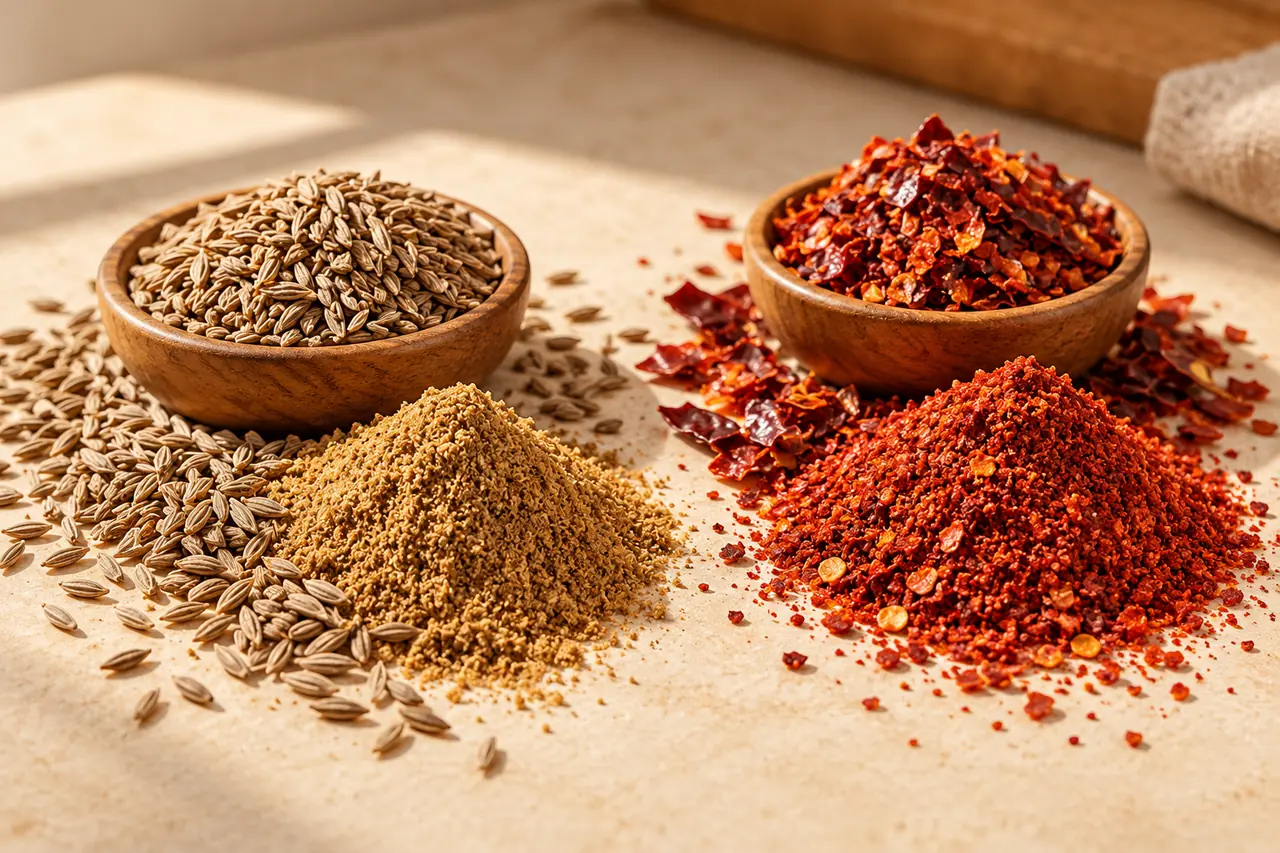
Use the cooled roasted input to establish a repeatable mill feed. Record the material condition and compare powder aroma at the same elapsed time after grinding, rather than compare a warm fresh scoop with an older cooled sample.
The cumin research supports tracking grinding conditions as part of quality. For this project, the practical supply decision remains the whole seed and the prepared chili input that work with your own roasting and milling equipment.
Balance powder recovery with the aroma you want
Accepted powder and retained aroma matter more than feed rate alone.
| Result | Compare on the same basis | Purchasing consequence |
|---|---|---|
| Usable powder | Accepted mass from weighed prepared input | Select the feedstock that limits avoidable rework |
| Particle distribution | Accepted fraction plus oversize | Match the grind to the finished seasoning |
| Cooled aroma | Same temperature and time after grinding | Keep the preferred flavour with its processing route |
Grinding changes particle size and can warm the material. More throughput is not useful if the powder needs extra milling or the cooled aroma misses your seasoning target. Compare cumin and chili separately so one component cannot conceal the other's response.
Weigh the prepared input entering your mill. Record inlet condition and outlet powder temperature using your chosen method, then separate accepted powder, oversize and material retained in equipment where practical. Judge equal portions at the same cooled condition and elapsed time. Compare usable output with the required distribution and aroma. If finer grinding adds no benefit in the food, retain the less demanding route instead of pursuing fineness alone.
Evaluate the two finished components before combining them
Approve the processed cumin and chili individually before judging the final seasoning.
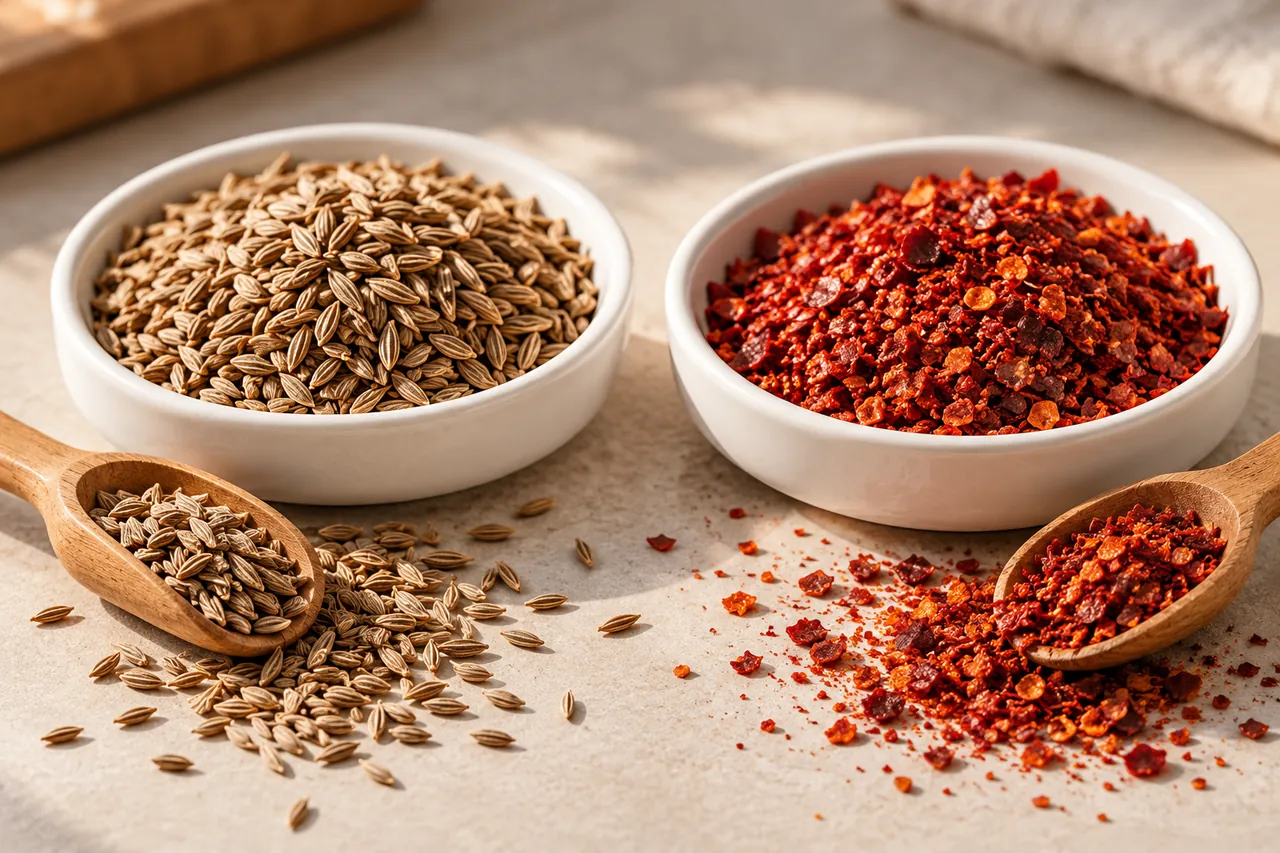
Taste the ground cumin in an appropriate food base and judge chili heat and colour in the intended seasoning context. Then create the actual blend using the accepted component preparations. If the blend misses its target, component references allow you to distinguish a cumin-aroma adjustment from a chili-heat or particle adjustment.
The cumin's twelve-month cool/dry declaration and the chili candidates' own period statements describe the incoming products. They do not establish the storage life of freshly roasted powder or your compound blend. Packaging, cooling before closure and holding observations belong to the buyer's processed product assessment.
Retain references that identify where a later difference begins
Locate a change in the raw input, roast, mill or blend before revising supply.
- 01Incoming difference
Compare raw identity, condition and aroma before changing the process.
- 02Processed difference
Review roast, cooling and milling with retained component samples.
- 03Blend difference
Check actual proportions and distribution after accepted components enter the blend.
Keep raw input, roasted input and accepted ground material identifiable for each component. The point is not to collect paperwork for its own sake: a normal incoming seed with an abnormal milled aroma points to a different investigation from an off-character raw seed. Likewise, a change after blending should not automatically trigger a new cumin specification.
Review incoming lot, roast endpoint, cooling interval and milling settings before attributing a repeat-order difference to one cause. FDA's spice risk work also means that sensory acceptance and drying descriptions cannot substitute for the ingredient safety assessment required by your responsible team.
Send a two-input brief with a clear processing handover
Put the cumin and chili preparation requirements on separate enquiry lines.
- 01Incoming material
Specify whole cumin and the actual chili cut independently.
- 02Buyer process
Describe buyer roasting, cooling, milling and the finished fraction needed.
- 03Evaluation output
Return component aroma, usable recovery and blend results to guide the next comparison.
Send the whole-cumin requirement and chili-feedstock requirement on separate lines. Include the buyer steps you will perform, desired finished distribution, aroma and heat targets, and any measured sorting or milling constraints. A useful sample request asks for identified input material suitable for those comparisons, rather than for a universal roasting or grinding result.
- Whole-cumin receiving specification
- Chili cut and seed-to-skin criteria
- Buyer roasting and cooling process
- Target finished grind
- Flavour and analytical acceptance
- Separate quantities and packaging
Your next purchasing decision
Plan the cumin and chili processing handover
Send the target grind, cooled flavour reference and work your plant will perform.
Send separate cumin-seed and chili-feedstock requirements, then describe the roasting and milling steps your operation retains.
Include incoming preparation, target powder distribution, cooled aroma reference and measured recovery constraints. Discuss the proposed materials and order quantities as distinct lines.
The enquiry page keeps this guide with your message. Add your quantity and destination so we can discuss the relevant material.