Whole Chilies, Flakes and Powder for Filtered Chili Oil
For chili oil with the solids removed, compare whole pods, flakes and powder by the oil you recover after filtration. RELIA SPICES can discuss a prepared cut or grind, or the pod preparation your operation will retain. Finer material may improve contact but add separation work. Send your oil reference and filter arrangement so we can select an input against flavour, clarity and useful recovery together.
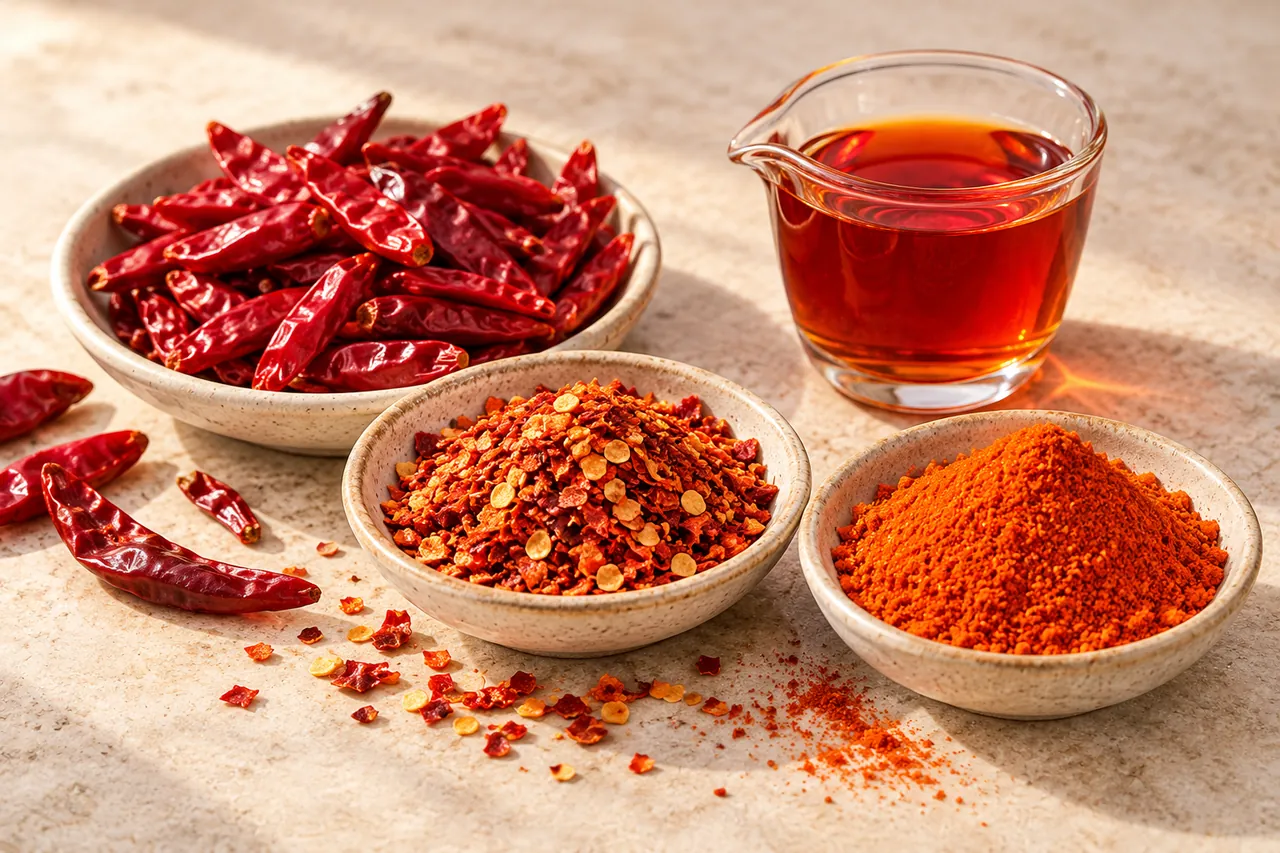
- Whole-pod route
- New Generation pods list 50,000–90,000 SHU and 12–14% moisture.
- Prepared inputs
- Coarse flakes list 5–8 mesh; Cayenne powder lists nominal 60 mesh.
- Useful output
- Compare accepted filtered oil, retained liquid and filter work together.
Choose how much preparation arrives with the chili
Decide which cleaning, cutting or grinding work should be completed before delivery.
- 01Whole pods
Retain the agreed sorting, stem and size-reduction work.
- 02Prepared flake or powder
Receive the particle preparation selected for oil contact.
- 03Filtered oil
Approve recovered oil after your actual separation process.
RELIA SPICES cleans and destems purchased dried chilies, then grinds or cuts, sieves and packs the agreed preparation. For filtered oil, choose whether to receive a prepared flake or powder, or retain more pod preparation in your plant.
The New Generation pods list 50,000–90,000 SHU and 12–14% moisture. Coarse Gochugaru-described flakes list 5–8 mesh and moisture ≤8%; Cayenne powder lists nominal 60 mesh and moisture ≤9%. We check moisture and particle size internally, arrange ASTA, SHU and microbiology through outside laboratories, and offer in-house steam treatment according to order requirements. Compare the selected inputs through your actual oil-contact and separation route.
Compare three catalog inputs without equating their heat
Pod, flake and powder candidates differ in pepper profile as well as physical form.
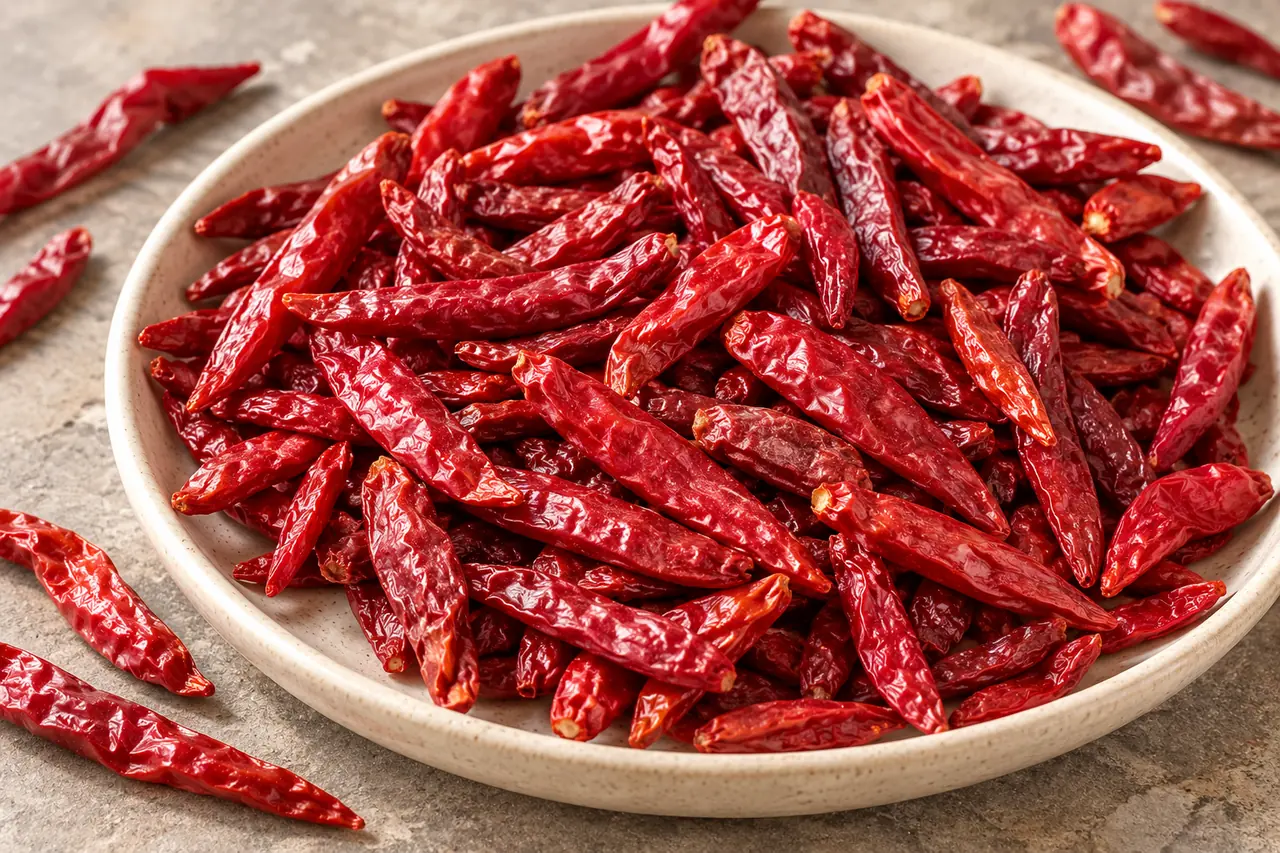
The New Generation dried pod listing describes 3–6 cm pods, 50,000–90,000 SHU and moisture 12–14%, with cleaning before eating as its preparation instruction. The coarse Gochugaru-described flakes carry 5–8 mesh, moisture ≤8% and a pungent-flavour description. The Cayenne powder has nominal 60 mesh, moisture ≤9% and qualitative Mild/Medium/Hot options. These are different materials as well as different forms; do not attribute every oil difference to particle size alone.
Ingredients to compare for this application
New Generation whole chili pods
Compare when your plant wants to retain more preparation before oil contact.
- 3–6 cm pod description
- 50,000–90,000 SHU
- 12–14% moisture
Coarse crushed chili flakes
A prepared coarse form to compare with pod preparation and fine powder.
- 5–8 mesh reference
- Moisture ≤8%
- Strong, pungent flavour description
Nominal 60-mesh Cayenne powder
Compare a ground input while measuring its filtration and retained-oil burden.
- Nominal 60 mesh
- Moisture ≤9%
- Mild, Medium or Hot profile to select
These product specifications are a starting point for selecting a grade. Match the proposed material and sample to your food and order requirements.
Start the comparison at the prepared chili
Measure preparation losses before measuring losses in oil separation.
| Input | Work before oil contact | Material to weigh |
|---|---|---|
| Whole pods | Agreed cleaning, stem selection and size reduction | Prepared chili after those operations |
| Flakes | Any screening or other preparation used | Selected flake and accompanying fines |
| Powder | Any agreed deagglomeration or screening | Actual powder entering the oil |
For a whole-pod route, weigh material after the cleaning, stem selection and size reduction your operation performs. For flakes or powder, use the actual supplied sample and note its fines, seeds and clumps.
Keep these preparation losses separate from oil retained during filtration. This prevents a route requiring more buyer work from appearing equivalent simply because the delivered chili weights match.
Keep oil contact conditions explicit for each version
Keep oil contact fixed when comparing materials; record process changes as separate versions.
- ✓Material comparison
Keep the operating route fixed when comparing identified input samples.
- ✓Route comparison
Record preparation or contact changes as explicit process versions.
- ✓Finished oil
Make the decision after separation rather than from the unfiltered mixture.
Use your approved operation to record oil identity, chili and oil masses, equipment, mixing and actual temperature/time history. Sample before and after separation. If you compare a different contact time or grind, make it a deliberate version rather than quietly favouring a candidate. Original chili-oil research shows that processing conditions can change aroma; it does not provide a universal extraction recipe for these three materials or make their starting sensory profiles equivalent.
Measure filter loading on the actual separation train
Finer input can make the filter work harder even when initial colour looks attractive.
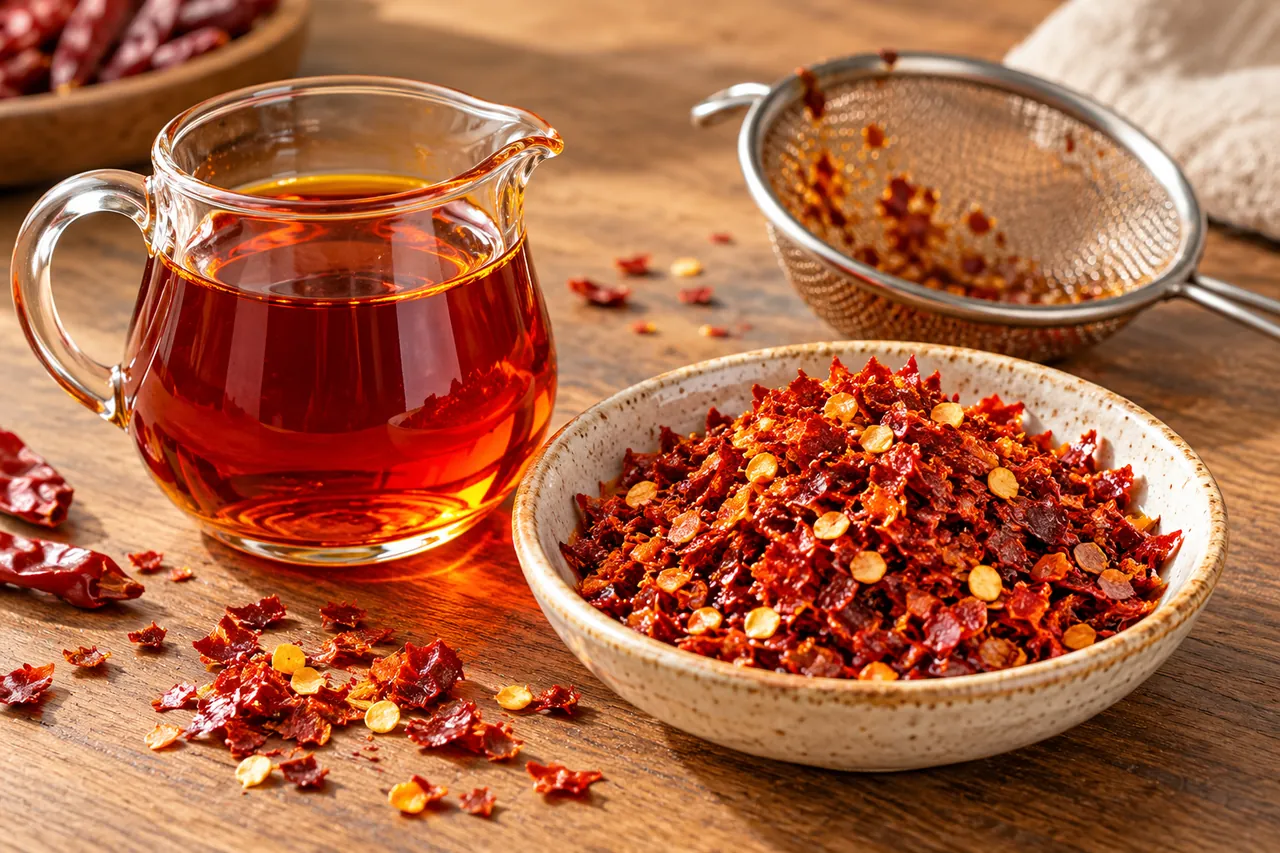
Record filter medium, effective area, operating temperature and the flow or pressure indicators your equipment provides. Observe when a change-out is needed and whether fine material reaches the recovered oil. Do not select powder merely because finer preparation may assist contact: an original extraction study also reports difficulty separating oil from chili solids. That finding supports examining both stages; it does not quantify your filter capacity or establish a specific recovery advantage.
Balance oil contact with useful recovery
Rank the recovered oil and separation burden as one purchasing route.
- 01Contact
Compare the selected chili under the same oil-contact route.
- 02Separation
Observe filtration work and liquid retained with solids.
- 03Accepted oil
Measure usable output meeting the same flavour and clarity target.
Size reduction exposes more chili surface to oil, but the resulting fines can increase filter loading or leave more liquid with the residue. A vivid unfiltered sample is therefore only an intermediate result.
Weigh prepared chili and oil entering the trial. Measure accepted recovered oil, retained wet residue and other identifiable losses, keeping wet residue weight separate from the amount of oil it contains. Note filter medium, operating conditions and changes in flow or filter replacement. Compare the finished oils at the same temperature and holding point for colour, aroma, heat and sediment. Use that complete result to choose the cut or grind, rather than automatically choosing the finest powder.
Check whether the filtered oil stays acceptable at use
Check clarity and flavour again at the intended holding and use points.
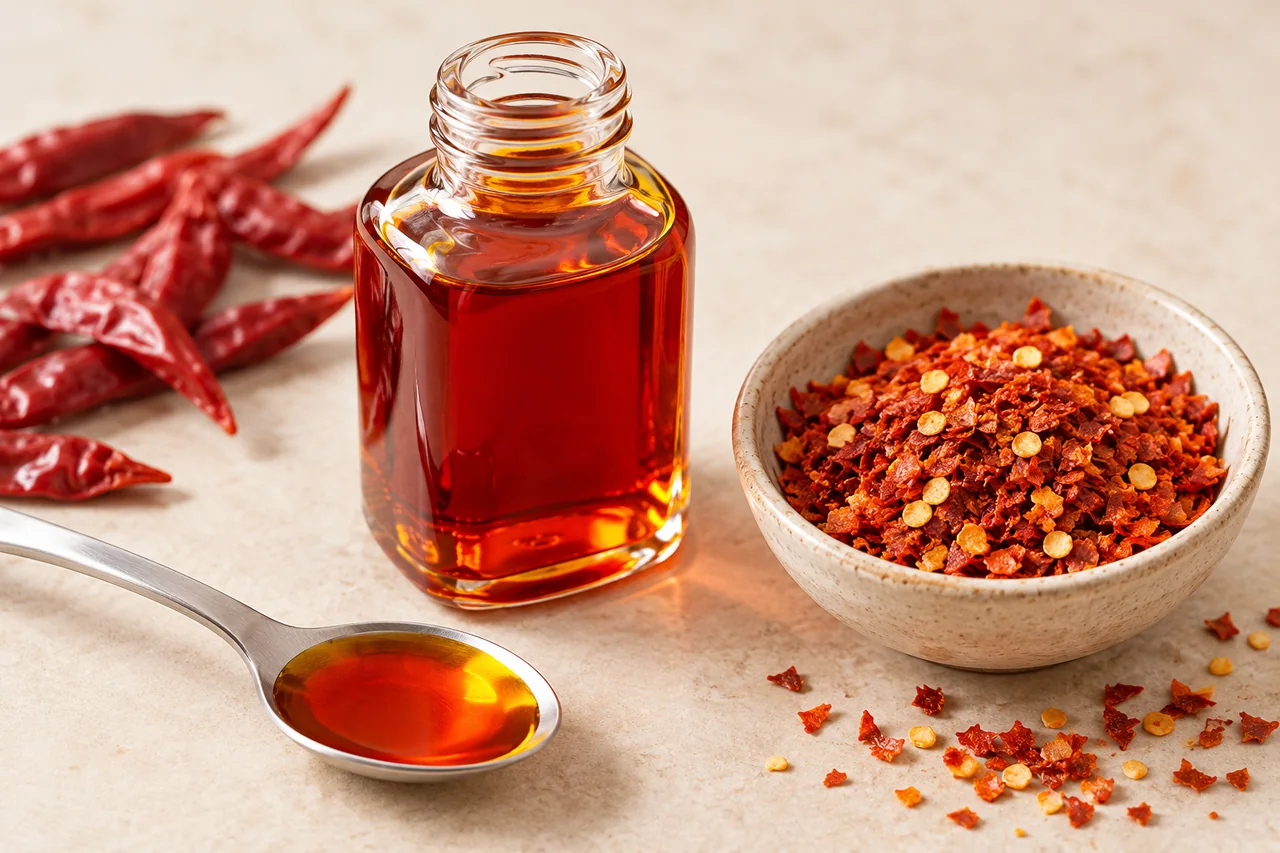
Retain the initial filtered reference and inspect the oil in the intended package at actual planned observation points. Compare sediment, appearance and flavour using the same method. A finer filter may change usable recovery or operating time, so record the complete route when investigating an improvement. The incoming pod's six-month cool/ventilated declaration, or a powder's ingredient storage period, cannot establish the finished oil's shelf life.
Compare cost per acceptable recovered oil output
Compare cost per acceptable recovered oil rather than price per delivered kilogram.
- 01Preparation burden
Include measured buyer sorting, cutting or milling before oil contact.
- 02Separation burden
Include actual filter changes, time and identified retained-oil losses.
- 03Accepted output
Relate costs to recovered oil meeting the same sensory and clarity target.
Combine delivered input cost, measured cleaning or grinding work, filter consumption, operating time and usable recovered oil. Do not turn a published solvent or laboratory extraction yield into an edible-oil manufacturing assumption. The route with the strongest unfiltered colour may still have an unfavourable separation burden, while an easier-filtering route may require another flavour decision. Select the combination that meets your oil specification within the operation you can actually run.
Send a filtered-oil brief with the separation boundary
Send the accepted oil profile and filter arrangement with the ingredient request.
- 01Define the output
Describe accepted oil colour, heat, aroma and suspended-material criteria.
- 02Describe the operation
State buyer preparation, oil contact and actual filter arrangement.
- 03Request the input
Link the identified material sample and package to the route being compared.
Send the accepted oil reference, permitted input forms and current separation arrangement. We can discuss the pod, crushed or ground preparation, its moisture and particle criteria, and any order-selected steam treatment. Include your oil-contact route and the recovery observations so the offered material and your finished-oil comparison share the same boundary.
- Target oil profile and clarity
- Permitted forms and preparation capability
- Oil-process conditions
- Filter arrangement and operating basis
- Recovery and evaluation requirements
- Sample quantity and receiving package
Your next purchasing decision
Discuss the input for your filtered chili oil
Discuss a defined pod, flake or powder input for your filtered oil.
Share the oil profile, clarity endpoint and filter arrangement, together with the preparation your operation can perform.
Include the actual recovered-oil comparison and requested ingredient treatment. We will discuss a specific pod, flake or powder preparation for that route.
The enquiry page keeps this guide with your message. Add your quantity and destination so we can discuss the relevant material.