
Powder and Flake Selection for Hot-Oil-Poured Chili
For hot-oil-poured chili, choose powder for the pepper background and flakes for the visible bite. RELIA SPICES can prepare the ground and crushed fractions separately. Compare how they wet during your pouring sequence, then judge the cooled condiment for flavour and particle feel. Send the oil, pouring order and serving reference so the next ingredient comparison addresses the part of the condiment you want to improve.
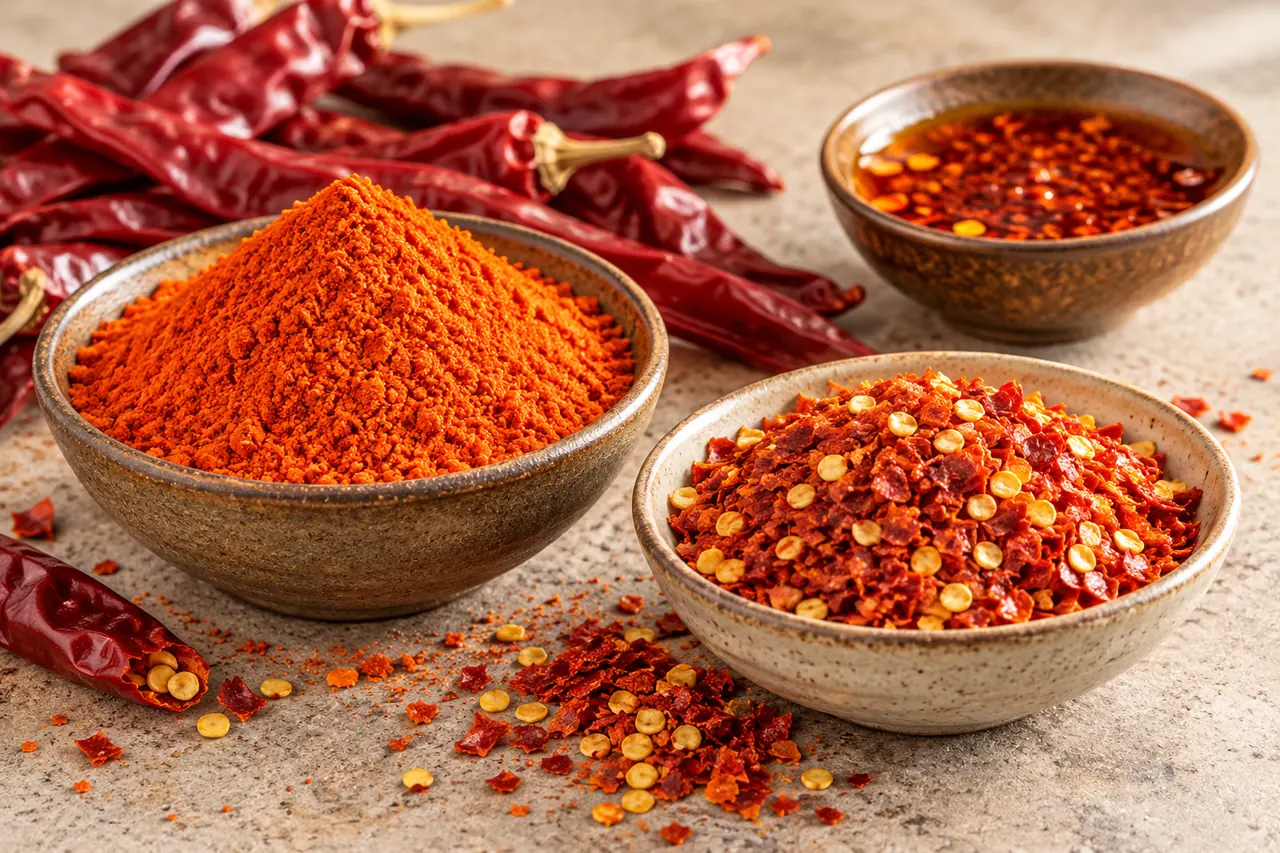
- Powder role
- Cayenne and Gochugaru-described powders each list 60 mesh but have different profiles.
- Flake role
- Coarse Gochugaru-described flakes list 5–8 mesh and moisture ≤8%.
- Food result
- Inspect wetting beneath the oil surface, then taste the cooled condiment.
Prepare powder and flakes for different jobs
Select the powder distribution and visible flake cut as separate preparations.
- 01Powder
Build the pepper background while controlling unwanted coarse sensation.
- 02Flakes
Provide visible pieces with an agreed seed and fine fraction.
- 03Combined condiment
Approve both roles after your actual pour and cooling.
RELIA SPICES cleans and destems purchased dried chilies, then grinds or crushes, sieves and packs the chosen preparations. For poured-oil chili, define a powder background and a separate visible flake. Cayenne powder lists nominal 60 mesh and moisture ≤9%; Gochugaru-described powder lists 60 mesh and moisture ≤7%. Coarse flakes list 5–8 mesh and moisture ≤8%.
We check moisture and particle size internally. Numerical heat and microbiology testing use outside laboratories; in-house steam microbial reduction is selected according to order requirements. Choose the supplied treatment with the sample, then compare its actual wetting and cooled texture in your recipe.
Use the two powders and coarse flakes as a defined shortlist
Similar mesh labels do not make two powders equivalent in flavour or moisture.
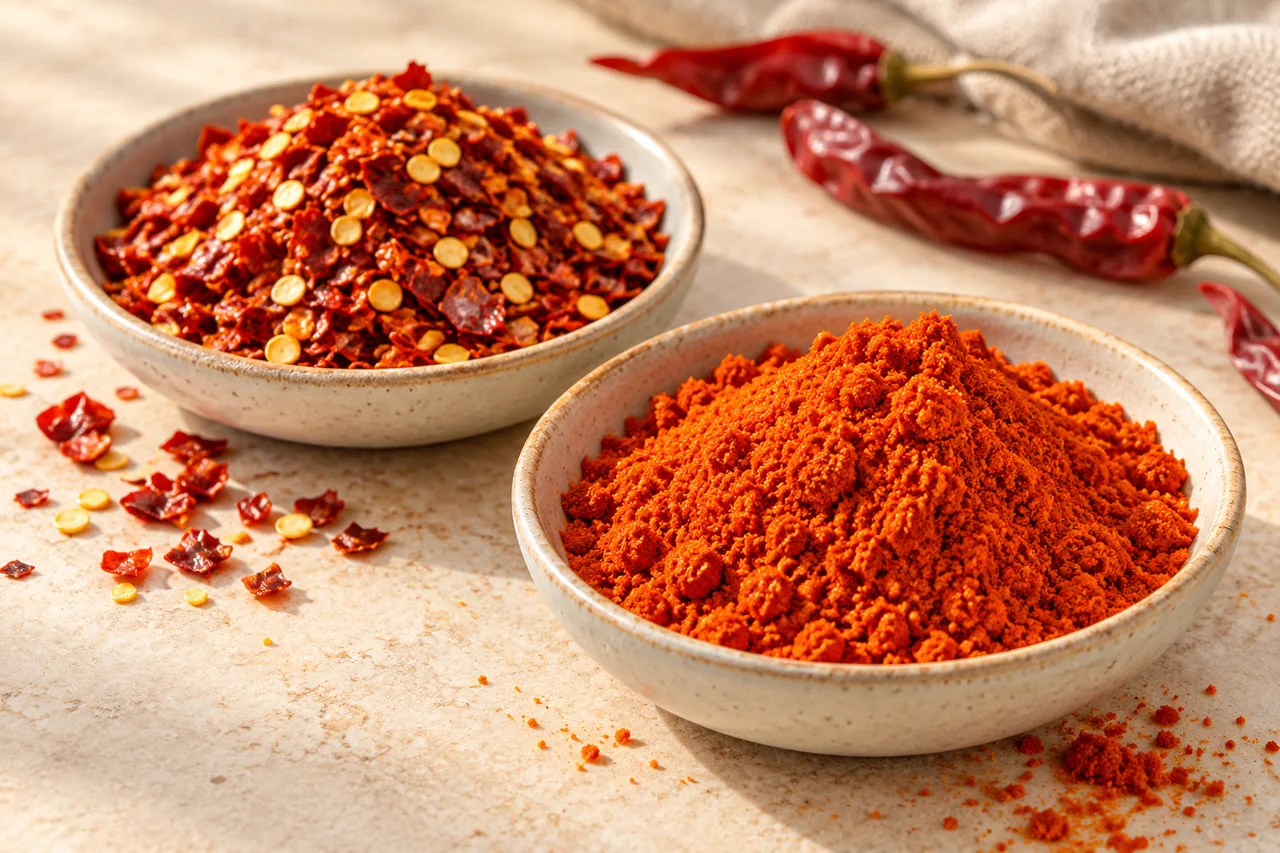
The Cayenne powder states nominal 60 mesh, customizable 60–70 mesh and moisture ≤9%, with qualitative Mild/Medium/Hot options. The Gochugaru-described chili powder separately states 60 mesh, moisture ≤7% and Raw/AD descriptions. The coarse crushed flakes state 5–8 mesh and moisture ≤8%. These are catalog declarations for different ingredients, not three directly comparable water contents or an automatic sequence of supplied particle grades. Request representative actual samples for the selected preparation.
Ingredients to compare for this application
Cayenne powder for a selected heat profile
Start here for a powder background with a separately chosen Mild, Medium or Hot profile.
- Nominal 60 mesh
- 60–70 mesh customizable scope
- Moisture ≤9%
Gochugaru-described red chili powder
Compare a separate powder profile for the background and cooled condiment texture.
- 60-mesh reference
- Moisture ≤7%
- Strong, pungent flavour description
Coarse red chili flakes
Add a separately defined visible-piece role rather than asking powder to provide the entire texture.
- 5–8 mesh reference
- Moisture ≤8%
- Crushed red chili preparation
These product specifications are a starting point for selecting a grade. Match the proposed material and sample to your food and order requirements.
Check incoming condition before diagnosing a pour result
Check clumps and coarse particles before treating poor wetting as a grind problem.
| Observation | Keep separate | Why it matters |
|---|---|---|
| Clumps and coarse tails | Actual distribution versus nominal mesh | Explains incomplete wetting or coarse feel |
| Moisture | Declaration versus sampled result | Describes the input condition |
| Processing | Executed route versus catalog term | Avoids comparing assumed treatment histories |
Spread the incoming powder to inspect clumps and persistent coarse pieces. Check the flakes for the seeds and loose fine material that will enter the condiment. Use actual moisture and particle results with the sample rather than comparing catalogue maximums as if they were measured water contents.
Select the actual process and any requested steam treatment before the pouring trial. The Cayenne's thermal wording and the other materials' Raw/AD descriptions do not establish the same flavour history.
Wet the solids before judging the cooled flavour
Connect the pouring sequence to wetting and the cooled eating result.
- 01Incoming condition
Check powder clumps, coarse particles and the flake preparation.
- 02Oil contact
Inspect wetting after the agreed pour order and stirring.
- 03Cooled food
Compare flavour and particle feel at the intended serving condition.
Oil can cover a powder bed while leaving dry pockets beneath it. Stirring, addition order and existing clumps affect which solids meet the oil; a uniform surface alone does not show uniform wetting.
For the first comparison, hold oil identity, ingredient loading, vessel and your approved pouring sequence steady. Record actual temperatures, pour order and stirring. Inspect representative solids for dry centres, clusters and uncoated flakes, then taste the cooled condiment for pepper character, bitterness, heat and particle feel. If another grind or addition order improves wetting, retain it as a separate version and repeat the flavour check. We can adjust the supplied preparation discussion to the result without prescribing a universal pouring temperature.
Inspect wetting before judging the final particle feel
Inspect solids from different positions, not only the attractive surface oil.
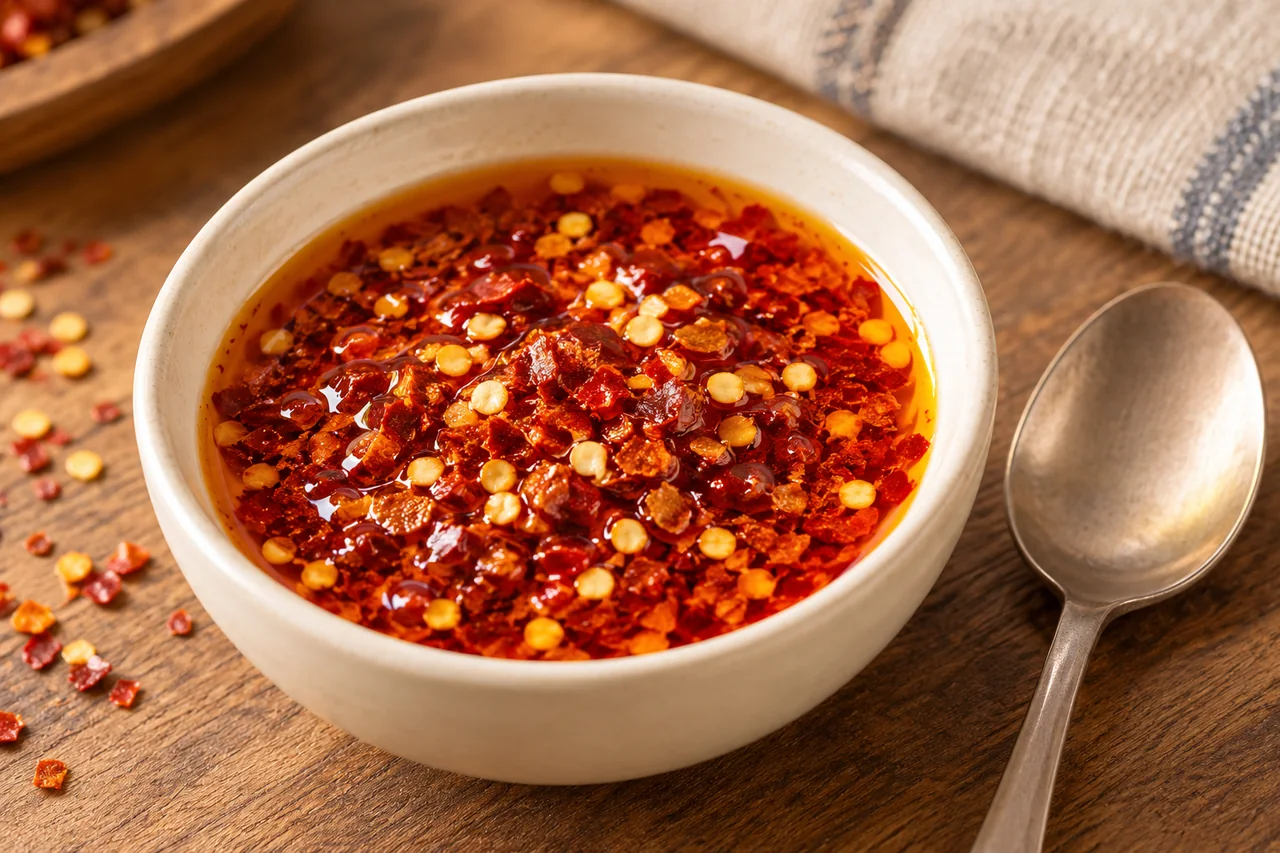
Look for dry pockets, powder clusters, uncoated flakes and concentrated fines after the normal stirring step. Draw representative material from different positions rather than tasting only the surface oil. If wetting differs, compare the addition order and clump condition before requesting a finer grind. A visually uniform oil surface can conceal uneven solids beneath it; conversely, visible flakes can be intentional rather than evidence of poor dispersion.
Compare immediate aroma with the cooled condiment
Judge cooled flavour separately from the aroma rising above the vessel.
- 01After preparation
Record the initial pepper and oil character without treating it as final acceptance.
- 02After cooling
Use the normal serving condition to assess heat, bitterness and particle sensation.
- 03At intended use
Taste with the actual food where the condiment's balance matters.
Use a consistent sensory method to record pepper character, toasted notes where actually perceived, bitterness, heat and aftertaste. Judge the cooled serving as well as the fresh preparation. An impressive aroma over the vessel is not the same endpoint as a condiment consumed later. Keep oil identity in the trial, because the cooking medium contributes its own flavour. Do not infer a smoked or roasted ingredient grade from a hot-oil aroma or from a processing label.
Judge the retained solids using the user's actual serving action
Use the customer's real stirring, spooning or pouring action.
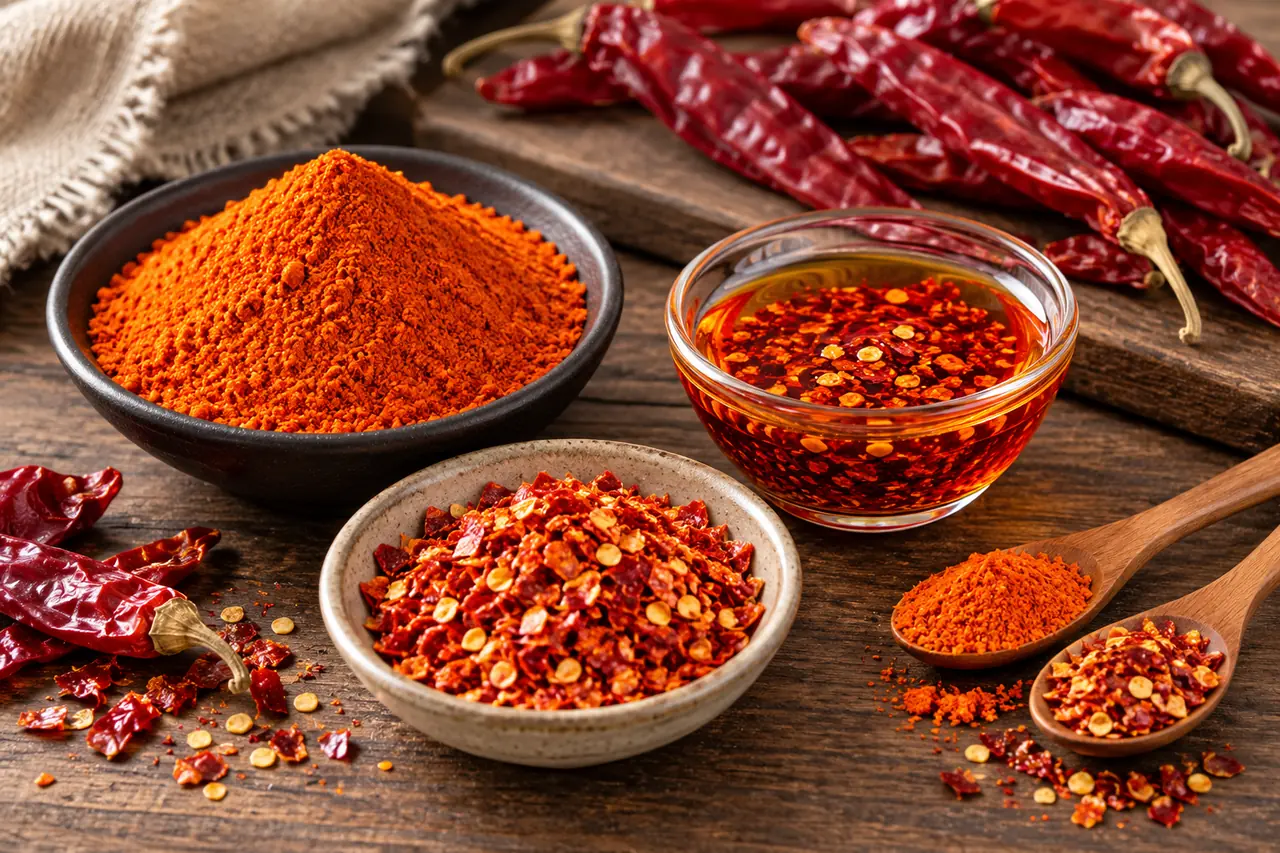
Stir, spoon or pour the condiment in the way available to its user. Compare solids and flavour in ordinary portions, including material left on the vessel walls or base. If the product is expected to be shaken, define that action rather than using a laboratory mixer to obtain an attractive sample. Sustained settling and redispersion are a separate retained-fines task; the present decision starts with a reproducible pour and a useful cooled powder/flake balance.
Select the route using flavour, texture and operating work
Include extra screening or changed mixing in the route comparison.
- 01Sensory fit
Meet the cooled aroma, heat and bitter-note requirements.
- 02Physical fit
Meet wetting and serving-texture criteria with the chosen fractions.
- 03Operating fit
Account for actual extra preparation or process changes needed.
Compare the candidates against the same cooled reference, then include the preparation burden required to get there. A material needing additional screening or a revised mixing sequence may still be useful, but that route should be costed honestly. The Cayenne powder's twelve-month controlled-storage declaration and the other ingredients' twenty-four-month cool/dry references concern incoming packs. They neither establish the oil condiment's life nor prove its flavour remains unchanged.
Send a pouring-specific ingredient brief
Show which fraction supplies the background and which supplies visible pieces.
- 01Show the endpoint
Provide the cooled food reference and serving action.
- 02Describe the pour
Record actual oil contact, stirring and the fractions retained.
- 03Identify the material
Connect each sample and proposed grade to the same defined recipe.
Send the oil and condiment type, actual pouring sequence and accepted cooled reference. Identify which fraction supplies the background and which supplies the visible bite. We can discuss the grinding or crushing, sieve requirement and ordered treatment for those materials, then connect the proposed sample and package to your trial.
- Pour sequence and actual oil conditions
- Finished aroma and colour reference
- Powder and flake requirements
- Chosen trial proportions
- Serving-texture acceptance
- Sample quantity and packaging
Your next purchasing decision
Plan a powder-and-flake pouring comparison
Discuss the powder and flake combination for your own pouring sequence.
Share your oil, pouring sequence and cooled serving reference, together with the retained particle feel you want.
Include separate powder and flake requirements, permitted process changes and order quantity. The next comparison should identify both the supplied preparation and the route used to judge it.
The enquiry page keeps this guide with your message. Add your quantity and destination so we can discuss the relevant material.