
Chili Powder for Potato-Chip Surface Seasoning
For potato-chip surface seasoning, start with sweet paprika for an even red background and choose the heat profile separately. Compare a defined powder on your actual chip, oil film and seasoning blend. Our nominal 70-mesh paprika offers a clear first particle reference; your application trial shows coverage, bite and loose powder. Send bare-patch or dust photographs and the seasoning stage for a focused proposal.
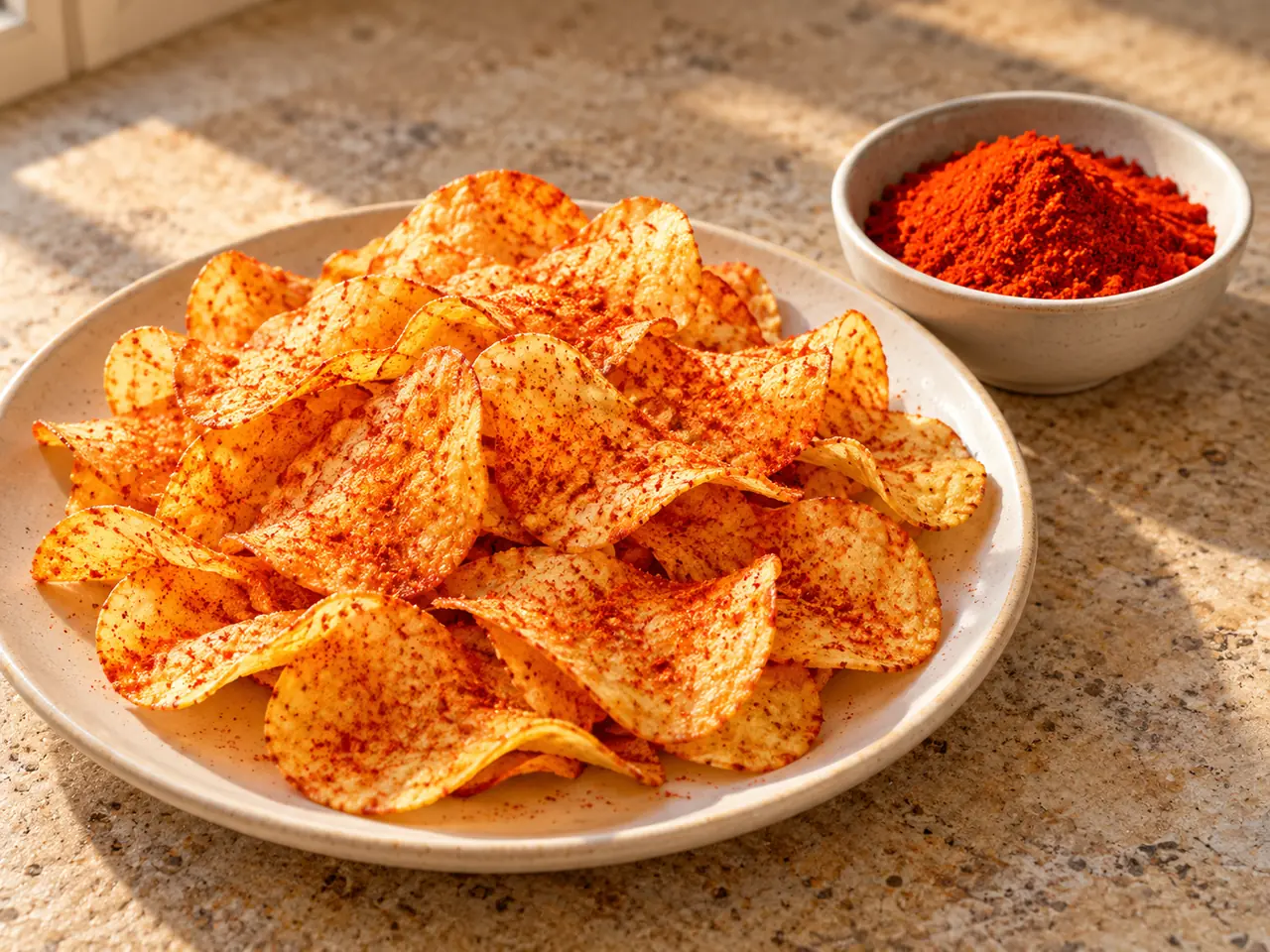
- Colour-led start
- Sweet paprika offers nominal 70 mesh, moisture ≤8% and customizable 80–220 ASTA.
- Actual surface
- Keep the chip, oil application and seasoning route fixed while comparing powders.
- Useful comparison
- Inspect portion coverage and bag-bottom composition, rather than charging every loose solid to chili.
Prepare the powder for your chip surface
Control chip and oil contact before changing the powder fraction.
- 01Base chip
Use the same chip and cooking route so changes in surface condition are not mistaken for a pepper effect.
- 02Oil contact
Keep oil application and the stage of seasoning fixed during the first powder comparison.
- 03Tumbling
Compare coverage and loose seasoning after the same application and handling sequence.
At RELIA SPICES, we clean and destem purchased dried chilies, then grind, sieve and pack the selected powder. For chips, define its fine fraction, coarse residue and moisture alongside the actual oil-contact and tumbling route. Particle preparation supports a useful comparison without promising adhesion on every surface.
Our moisture and particle checks are internal; ASTA, SHU and microbiology use external laboratories. In-house steam microbial reduction is selected according to order requirements. State when seasoning follows chip cooking so the ingredient treatment addresses the actual addition point.
Separate colour-led and pepper-led offers
The alternative red powder needs a selected flavour and heat profile before substitution.
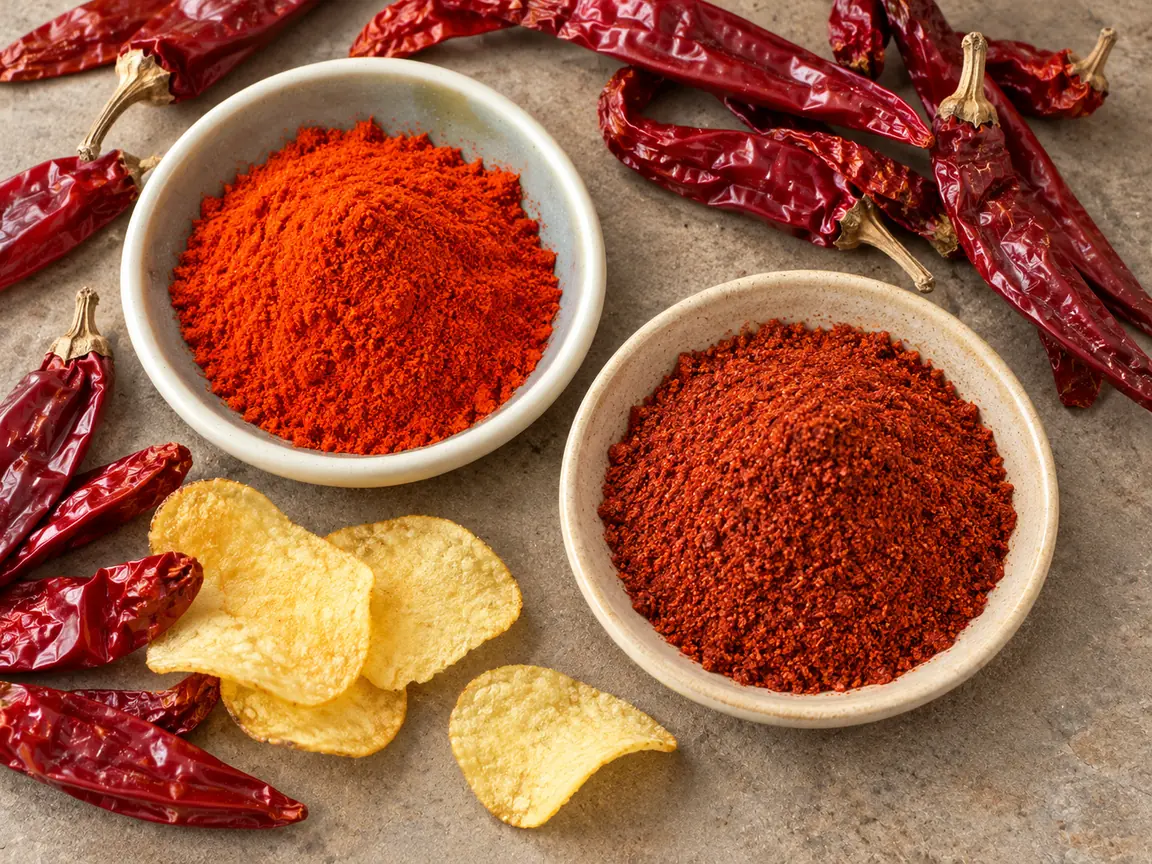
The nominal 70-mesh sweet paprika provides a separate customizable 60–70 mesh reference, moisture ≤8% and customizable 80–220 ASTA colour. It is a sensible colour-led starting candidate. The fine red pepper powder describes 60–70 mesh or a customized grind, moisture ≤9% and fine red appearance. Its hot-pepper name coexists with a mild, sweet, non-spicy flavour description. Do not approve it as a high-heat replacement without an identified pungency proposal. Its customizable colour entry also does not provide a measured ASTA grade.
Ingredients to compare for this application
Sweet paprika for chip colour
A colour-led first comparison where an identified nominal grind helps isolate powder effects on the surface.
- Nominal 70 mesh; separate customizable 60–70 mesh.
- Customizable 80–220 ASTA.
- Moisture ≤8%.
Fine red pepper powder
An alternative powder route once its actual flavour and pungency are selected for the complete seasoning.
- 60–70 mesh or customized grind.
- Moisture ≤9%.
- Hot-pepper naming coexists with a mild sweet, non-spicy descriptor; proposed heat needs resolution.
These product specifications are a starting point for selecting a grade. Match the proposed material and sample to your food and order requirements.
Separate powder defects from surface defects
A red cluster may be an agglomerate rather than a large individual particle.
| Evidence point | Factory material question | Chip-side observation |
|---|---|---|
| Particle check | Actual fraction and coarse tail | Dust versus hard red fragments |
| Moisture check | Selected paprika condition; listing limit ≤8% | Clusters versus a uniformly distributed blend |
| Colour evidence | Selected ASTA grade from an outside laboratory | Colour on several chips and portions |
| Application comparison | Keep the accepted powder identifiable | Oil pattern, handling loss and bag-bottom composition |
Grinding creates small pepper fragments; sieving selects a fraction but does not describe clumps or how pepper travels with salt and carriers. A red island on a chip can therefore be a wet cluster, while a hard red piece may come from the coarse tail.
Use our particle and moisture checks to identify the offered powder. Sweet paprika's ≤8% moisture reference does not guarantee blend flow, and external ASTA evidence describes colour grade rather than adhesion. Hold the chip, oil film and transfer route constant. Compare bare patches, local heat and loose seasoning after packing, including its composition. Chip-adhesion research supports examining the interface; it does not justify assuming finer powder always sticks better.
Inspect several chips and serving portions
Compare whole portions to reveal bare chips and concentrated hot bites.
- 01Across chips
Compare heavily coated and bare examples from the same run rather than a hand-selected photograph.
- 02Across a portion
Assess the flavour of a serving; one intense chip does not establish even heat.
- 03On the palate
Separate dry powder feel and coarse bite from the pepper intensity you want to purchase.
Use matched unseasoned chips, your accepted seasoning and candidate seasoning. Compare whole portions rather than selecting the reddest chips. Note bare patches, heavy red islands, powder on the fingers and concentrated heat on individual bites. Taste before and after the normal cooling and packing sequence. An acceptable average flavour can still hide a few excessively hot pieces. If the patchiness follows the oil pattern rather than the powder, address that application difference before replacing the pepper.
Collect loose seasoning at defined points
Measure loose material at defined stages and identify what was actually lost.
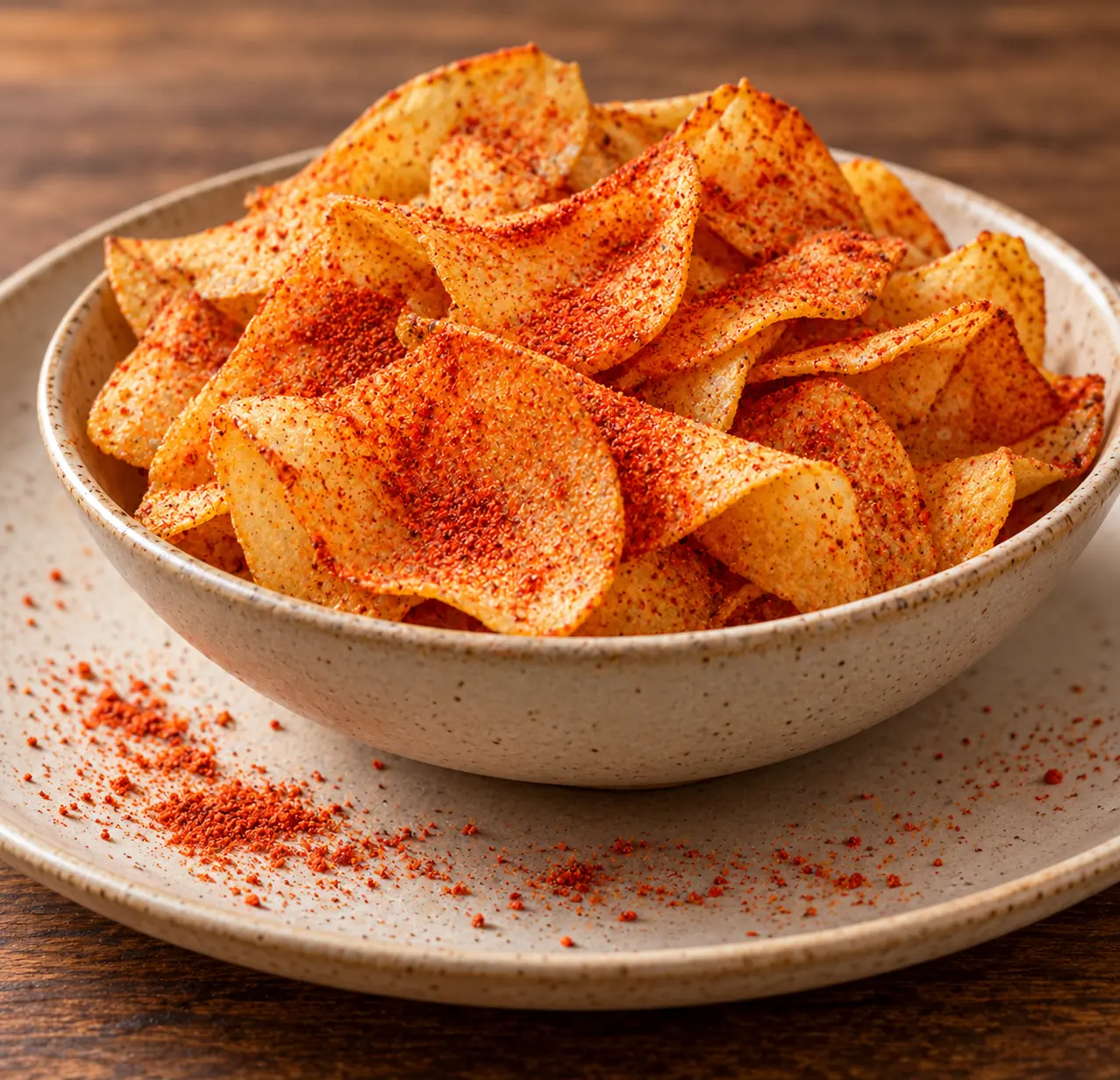
Collect loose material immediately after tumbling and separately after a defined handling simulation in the intended pack. Compare the composition of that material with the original blend: a loss of salt or carrier is not automatically a loss of chili. Keep chip breakage in its own fraction. Use the same transfer and collection method for every candidate. This produces a purchasing measure that can explain why two similarly coloured powders need different use levels or lead to different acceptable packed yields.
Keep the whole seasoning blend in view
Salt and carriers can segregate differently from pepper within the complete blend.
- 01Incoming powder
Sweet paprika declares moisture ≤8%; fine red pepper powder declares ≤9%. Neither limit proves non-caking behaviour.
- 02Complete seasoning
Salt, sugar and carriers can separate during handling; inspect the blend reaching the chips as well as the bag.
Pepper enters a complete seasoning containing other solids. Salt, sugar and carriers can travel differently from the pepper during blending and application, so inspect the mix reaching the chip as well as the ingredient bag. Keep the blend recipe unchanged during the first comparison. The nominal 70-mesh sweet paprika and the fine red pepper powder have different incoming moisture limits, but those numbers do not establish finished-blend flow or non-caking performance. Test any planned premix hold under your actual conditions before attributing a hopper problem to the paprika alone.
Select microbial reduction for a post-cook seasoning
Post-cook seasoning needs an ingredient-treatment decision specific to that late addition.
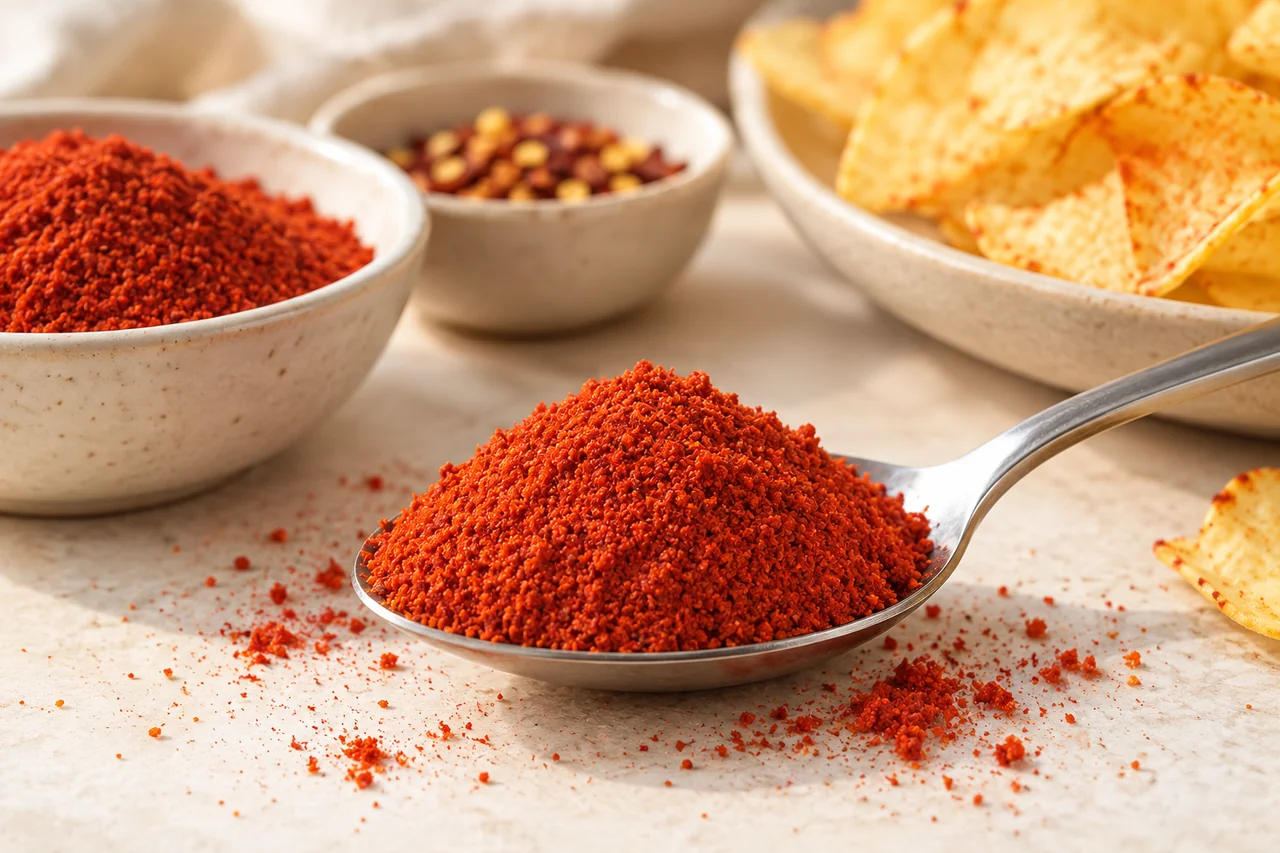
RELIA SPICES can use its in-house steam microbial-reduction equipment according to the order requirement. For pepper added after chip cooking, state that late-addition position and the required ingredient microbiological criteria. Ask for the selected material's actual process and applicable outside-laboratory evidence rather than infer execution from stir-fried wording. FDA's spice risk profile supports a separate hazard-control decision; sensory acceptance is not a hygiene release. Steam availability is a real manufacturing capability, while the accepted process scope, lot evidence and handling still belong to the actual ingredient order.
Compare cost at an acceptable chip result
Compare cost at an accepted packed-chip result, not at a catalogue colour endpoint.
- ✓Colour-led candidate
Use an actual sweet paprika grade within the customizable 80–220 ASTA scope, not an assumed maximum.
- ✓Heat-led candidate
Resolve the fine red pepper listing’s hot-name and mild-flavour conflict before assigning a heat role.
- ✓Accepted serving
Compare the dose and retained result that meet the same coverage, flavour and eating-texture target.
Compare cost on acceptable packed chips at the same flavour target. Include the actual pepper use and the loose-seasoning fraction you measured, but do not charge every chip fragment or carrier loss to pepper. A darker paprika may change the colour target at a different dose while also changing flavour. Keep those results visible rather than calculating savings from catalogue ASTA endpoints. The factory discussion should identify whether the next useful change is grade, distribution or preparation, not promise a universal adhesion improvement.
Send a surface-seasoning comparison brief
Show the defect and oil-contact stage before requesting a different red powder.
- 01Show the defect
Send bare-chip areas, red clusters or loose-dust photographs from a defined application route.
- 02Identify the base
Describe the chip, oil contact and complete seasoning blend rather than only requesting red powder.
- 03Request the material
Discuss the selected powder distribution, flavour and treatment scope with current commercial terms.
Share the chip type, oil application point, blend background and reference seasoning. Add photographs of bare areas, red clusters, loose dust or hard pieces. Name sweet paprika for a colour-led trial or the alternative fine red powder with a selected heat profile. Include the coarse-particle tolerance and post-cook treatment requirement so we can discuss a particular powder, sample scope and package.
- Chip type and cooking route
- Oil-film application point
- Colour and flavour reference
- Particle and eating-texture limits
- Seasoning-loss sampling scope
- Quality documents, quantity and package
Your next purchasing decision
Discuss a powder for your chip-seasoning stage
Ask for a powder matched to your chip-seasoning stage.
Send Qingdao Relia Spices Co., Ltd. / RELIA SPICES your chip type, oil application point and a photograph of bare areas or loose seasoning. Name the colour role and heat role separately.
The enquiry page keeps this guide with your message. Add your quantity and destination so we can discuss the relevant material.